How to Play DING DONG STREAM!
Ding, ditch, hide, and keep the livestream alive until the timer—and your Cash—say you won the bit.
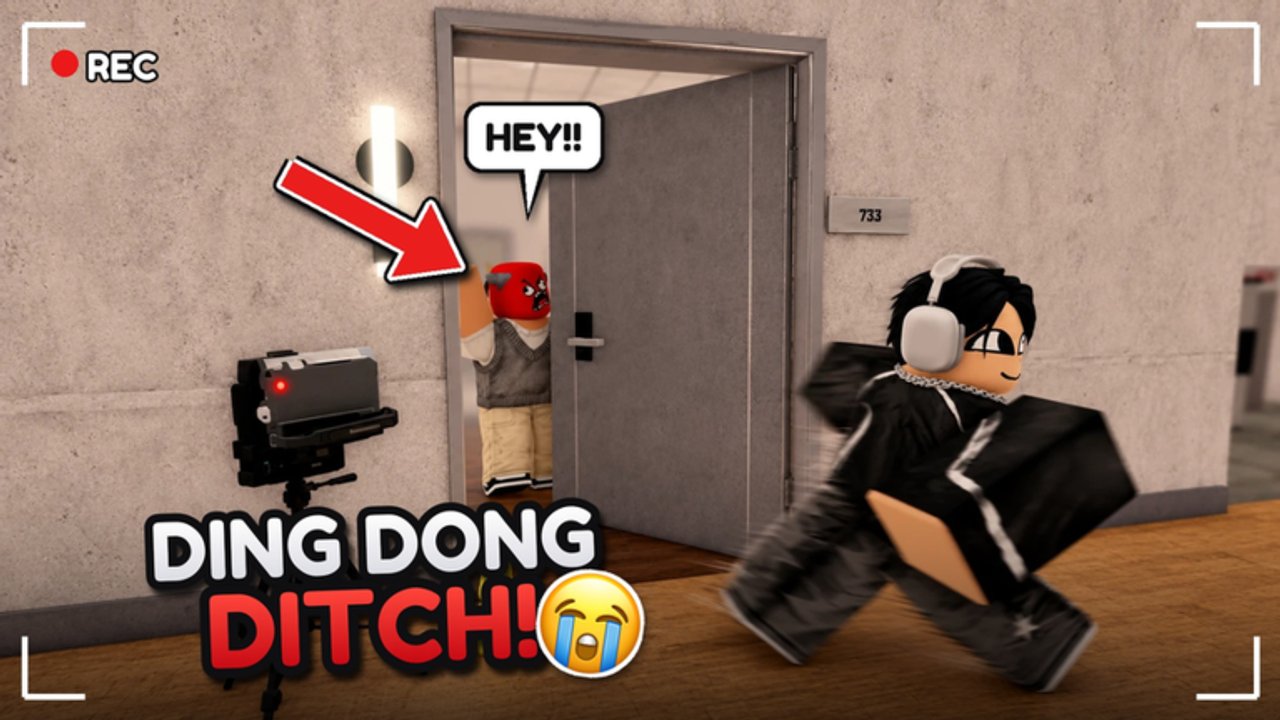
This page is the mechanical heart of DING DONG STREAM! by Tsuu Studio. If Getting Started is your lobby orientation, How to Play is the in-round rulebook: how a doorbell prank becomes a livestream segment, how the timer pressures you, how chat “engagement” fits the fantasy, and how Cash flows back into props and Spin Stream.
The core loop in one breath
Scout a door, confirm an escape path, ring the doorbell, break line of sight, hide or kite, watch the stream timer, and only re-engage when heat drops. Repeat across the map until the stream ends well—or until neighbors, security, or seekers end it for you. Servers hold up to 24 players, so your loop always shares space with other pranksters creating noise, bait, and accidental blockades.
Step 1 — Scout before you ding
Never treat the porch as a safe cutscene. Before you interact:
- Note two exits: a primary sprint line and a panic hide.
- Listen for other players already ringing nearby. Contested porches get hot fast.
- Check whether your current mode punishes lingering—especially Speedrun and Deadly. Mode specifics live in the Modes Guide.
Map geometry changes what “scout” means. Hotel corridors, High School stair wells, Hospital wards, and Ghost Village sightlines all punish different habits. Use the Maps Guide when a layout keeps killing the same approach.
Step 2 — Ding with commitment
Ringing is the content hook. Commit to the interaction, then leave. Players who hesitate on the mat get caught mid-joke. After Update 1.2 Part 2, knock and breach tools such as Door Ram, Rocket Breach, Hammer Throw, and Boxing Gloves can change how loud or fast a porch moment feels. Explosive toys like TNT and Hot Potato are for planned chaos, not every single door. Rankings and situational advice sit in the Props Tier List.
Step 3 — Ditch and break vision
The ditch is not random sprinting. Break vision around a corner, through an interior, or into foliage before you decide to hard-hide. If a seeker or neighbor saw your entry vector, a locker five steps away is a trap. Soft kite first, then hide. Hide technique details—including lockers, wardrobes, and bushes—are covered in Hiding Spots.
Step 4 — Respect the stream timer
The stream timer is the round’s truth serum. It tells you whether you still have time to farm another ding or whether you should play survival theater for chat. Good players glance at the timer the way shooters glance at ammo.
- High time + low heat: take another porch.
- Mid time + rising heat: one more ding only if the route is short.
- Low time: prioritize not getting caught; a clean fade often “plays” better than a greedy ring.
Endless teaches timer literacy safely. Speedrun compresses decisions. Deadly raises the cost of mistakes. Chaos floods the map with overlapping jokes. Choose deliberately via the Modes Guide.
Step 5 — Entertain chat without a script
You do not need to type essays. The game fantasy rewards visible bits: close calls, clever hides, multi-door streaks, and prop punches. Think like a variety streamer on a short VOD—action first, witty silence second. If you play Seekers vs Prankers, prankers perform; seekers create the antagonist arc. Role tips continue on the Players Hub.
Step 6 — Convert success into Cash
Cash is the bridge between a funny round and a stronger loadout. Earn through successful play, claim daily playtime rewards, and redeem codes (often Cash plus Spin Stream spins). Spend on props that fix your failures, not on every shiny unlock. For farming cadence and wheel discipline, read the Tools Hub. For device UI—including codes button, shop, and Spin Stream—use Controls.
Putting it together on a real route
Example Suburbs micro-route: approach a corner house with bush cover already marked, ding, cut through the side yard, hard-hide once, peek timer, then rotate two houses away before the next ding. Example Hospital micro-route: ding near a ward entrance, break into a side corridor, wardrobe commit, then avoid reusing the same wardrobe after nearby players saw you enter the wing. When routes feel weak, compare beginner-friendly versus chaos rankings in the Maps Tier List.
Team etiquette in crowded servers
With up to 24 players, friendly fire is social, not mechanical. Do not body-block a teammate’s only locker door for a meme unless your squad agreed to Chaos rules. Call targets loosely: “east porch,” “school side,” “ghost fence.” If someone is clearly filming a DITCH TV moment, give them ten seconds of space. Posting tips for highlight clips live under Tools.
Failure states and recovery
Getting caught is data. Ask which step failed: scout, ding commitment, vision break, hide choice, or timer greed. Then drill only that step for two rounds. Players who restart the whole skill tree after every death climb slower than players who isolate one mistake.
Patch awareness matters too. After Update 1.2 Part 2, High School space and new props changed how loud a “normal” round feels. Skim Update 1.2 and the Updates Hub so your muscle memory matches live rules.
Practice curriculum
- Ten clean ding-and-ditch cycles on Endless without prop spam.
- Ten hide commits across lockers, wardrobes, and bushes.
- Three streams where you never ding below a personal timer threshold you set.
- One prop-focused night using a single tool from the Props Tier List.
- One Seekers vs Prankers night focused on role discipline from the Players Hub.
Related reading order
- New to the game: Getting Started
- Need layouts: Maps Guide
- Need pressure variants: Modes Guide
- Need survival detail: Hiding Spots
- Need rankings: Tier List Hub
- Need lobby systems: Tools and Codes
Master the loop before you master the meta. When ding, ditch, timer, chat, and Cash all feel like one motion, every map and mode on this wiki becomes a remix instead of a reboot—and that is when DING DONG STREAM! stops feeling random and starts feeling like your show.
Frequently Asked Questions
Quick answers about codes, maps, modes, and stream runs.
What is the basic goal each round?
Ring doorbells, escape or hide, keep the stream fantasy going until the timer, and turn successful play into Cash and better props.
How does the stream timer change decisions?
High time favors more dings; low time favors survival and clean exits. Mode choice changes how harsh mistakes feel.
How do I earn Cash quickly?
Play clean streams, claim daily playtime rewards, redeem Codes, then spend on props that fix your real mistakes.
Should I use props on every door?
No. Save loud tools like TNT or Door Ram for planned moments; learn the unaugmented loop first.